

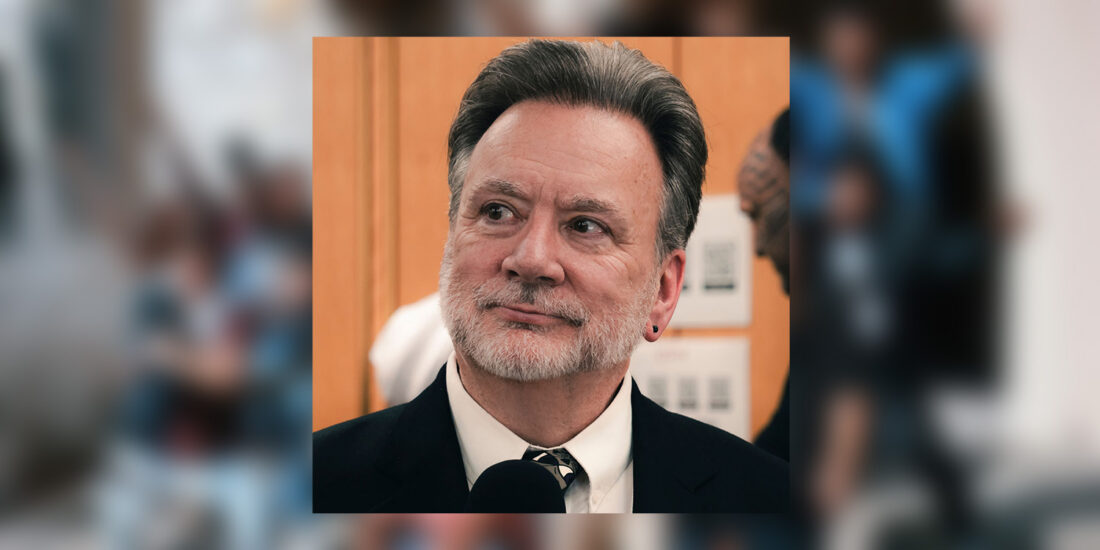
Professor Thomas G. Endres of the University of Northern Colorado, United States, will present the Keynote Presentation ‘A Storied Career: A Photo-Ethnographic Review of Rhetorical Communities’ at The 7th Kyoto Conference on Arts, Media & Culture (KAMC2026) and The 17th Asian Conference on Media, Communication & Film (MediAsia2026), to be held in Kyoto, Japan, and online.
Dr Thomas G. Endres is Professor of Communication Studies at the University of Northern Colorado and a scholar of communication theory, popular culture, and rhetorical communities, specialising in photo-ethnographic research. His keynote will explore how lived experience becomes shared narrative, how stories create communities, and why authentic human experience remains vital in an age of AI-generated simulation.
This keynote presentation will be held both onsite in Kyoto and online via live-stream. To participate in KAMC/MediAsia2026 as an audience member, please register for the conference via the conference website.
The presentation will also be available for IAFOR Members to view online as part of their membership benefits. To find out more about becoming an IAFOR Member, please visit the IAFOR Membership page.
Speaker Biography
Thomas G. Endres
University of Northern Colorado, United States
 Dr Thomas G. Endres is Professor of Communication Studies at the University of Northern Colorado, United States, where he teaches courses in communication theory, popular culture, group dynamics, and leadership. In a career marked primarily by administrative responsibilities, he found time to conduct research using Bormann’s Symbolic Convergence Theory (SCT) to identify the use of stories in creating rhetorical communities. He is author and photographer of Sturgis Stories: Celebrating the People of the World’s Largest Motorcycle Rally (Kirk House, 2002) and My Costume, Myself: Celebrating Stories of Cosplay and Beyond (Kirk House, 2001, 2023) and co-author, with Deanna D. Sellnow, of The Rhetorical Power of Popular Culture: Considering Mediated Texts, 4th ed. (Sage, 2023). His updated essay on SCT will appear in the forthcoming 2nd edition of Wiley-Blackwell's The International Encyclopedia of Communication Theory and Philosophy. He has delivered more than 250 presentations, workshops, and keynote addresses across the United States (including Alaska, Hawaii, and Puerto Rico) and abroad, including presentations in Austria, China, the Czech Republic, Japan, Spain, Thailand, Türkiye, and the United Kingdom.
Abstract
A Storied Career: A Photo-Ethnographic Review of Rhetorical Communities
How do stories create communities? In an era where AI can increasingly produce convincing simulations of lived human experience, this question takes on new significance, reminding us of the importance of attending to human experience as it is lived, remembered, communicated, and shared.
This keynote presentation examines four decades of research applying Bormann’s Symbolic Convergence Theory (SCT) to the stories and narratives through which rhetorical communities form. This retrospective highlights three major photo-ethnographic projects focused on distinct communities: motorcyclists and bikers, tattooed people, and cosplayers and costume enthusiasts. The talk explores how personal experience becomes narrative, how narratives circulate within communities, and how shared stories create connections among people through photographs and the favourite stories shared by projects’ participants.
As AI becomes increasingly capable of producing convincing simulations of human experience, this keynote argues that scholars must remain committed to studying the authentic intelligence of human beings. The lived experiences, memories, stories, and relationships through which communities are created and sustained are vital in chronicling and sustaining the lived communities we research, promote, and distribute through media and the arts. This talk also features related investigations in Japanese research that focus on narratives through which people make meaning of their lives within communities.
