

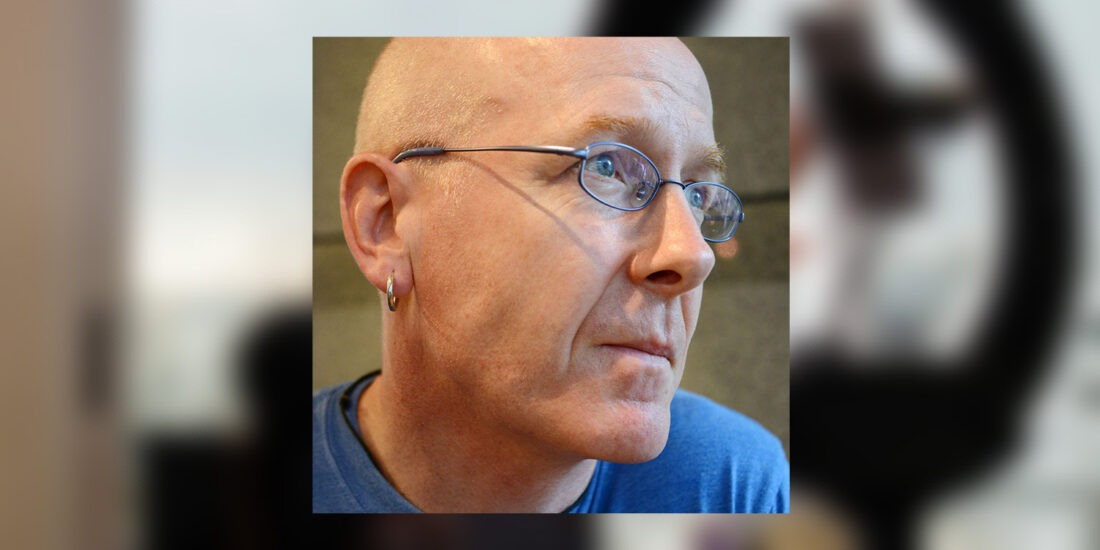
Professor David McNeill of the University of the Sacred Heart, Japan, will present the Keynote Presentation ‘TikToking Ourselves to Death: Journalism in Japan in the Age of Social Media’ at The 7th Kyoto Conference on Arts, Media & Culture (KAMC2026) and The 17th Asian Conference on Media, Communication & Film (MediAsia2026), to be held in Kyoto, Japan, and online.
Dr David McNeill is a journalist, author, and Professor of Liberal Arts with extensive experience covering Japanese politics, society, and the media. His keynote presentation will draw on his decades of work in journalism and academia to examine how social media is reshaping political communication in Japan today and challenging the traditional influence of newspapers and television.
This keynote presentation will be held both onsite in Kyoto and online via live-stream. To participate in KAMC/MediAsia2026 as an audience member, please register for the conference via the conference website.
The presentation will also be available for IAFOR Members to view online as part of their membership benefits. To find out more about becoming an IAFOR Member, please visit the IAFOR Membership page.
Speaker Biography
David McNeill
University of the Sacred Heart, Japan
 Dr David McNeill was born in the United Kingdom and raised in Ireland. He was awarded his PhD from Napier University in Edinburgh in 1998. He has since taught at universities in Ireland, the United Kingdom, China, and Japan, and is currently Professor of Liberal Arts at the University of the Sacred Heart, Japan. He is an editor and board member of the Asia-Pacific Journal: Japan Focus, was previously a correspondent for The Independent, The Economist and The Chronicle of Higher Education, and a columnist for The Mainichi Shimbun and The Japan Times. Dr McNeill is a long-time member of the Foreign Correspondents’ Club of Japan and currently edits No1 Shimbun, the FCCJ’s house magazine, while also serving as co-chair of the FCCJ’s Freedom of the Press Committee. He is co-author of Strong in the Rain: Surviving Japan's Earthquake, Tsunami and Fukushima Nuclear Disaster (Palgrave Macmillan 2012) and Japanese Rebels: Non-conformists in a Conformist Society (Routledge, 2026).
Abstract

TikToking Ourselves to Death: Journalism in Japan in the Age of Social Media
In November 2024, Motohiko Saito was re-elected governor of Hyogo Prefecture, Japan, an apparently unremarkable event that portends a major shift in the media. Saito quit after a unanimous no-confidence motion over workplace bullying. Lacking any political backing, he was criticised for months in the legacy media. Yet, he won 250,000 more votes than his previous election in 2021. Political comebacks of this kind in the face of a hostile press are exceptionally rare in Japan: the only other governor since 1945 to return to office following a no-confidence motion was Yasuo Tanaka in 2002. Saito’s secret weapon was social media. An NHK survey found that 30% of voters relied on YouTube and other video-sharing sites to source their information, 6% higher than either newspapers or television.
It will take time to digest the historical import of the Hyogo election, but there can be little doubt about one underlying truth: the ability of the once all-powerful Japanese media to shape political narratives is declining. The young have largely abandoned their parents’ habit of reading a newspaper every day and shun television for social media. Politicians such as Saito, Shinji Ishimaru, the surprise runner-up in the 2024 Tokyo gubernatorial election, and Prime Minister Sanae Takaichi have taken note.
